Svmuu News: Industry insiders note that historically, whenever the memory chip industry experiences a boom, manufacturers tend to expand production capacity simultaneously. This leads to a concentrated release of new capacity and a sharp drop in prices, plunging the entire industry into losses. Subsequently, manufacturers collectively scale back capital expenditures, and when demand rebounds, another boom follows—this cycle constitutes the industry’s unique cyclical nature.
Since hitting their peak in late June, U.S. memory chip stocks have experienced a collective pullback as news—such as Meta’s sale of computing power—sparked market concerns about an oversupply of computing power.Data shows that industry leaders such as SanDisk, Micron, Seagate Technology, and Western Digital have all seen their stock prices fall by more than 20% over the past few weeks.
Analysts point out that the underlying logic currently supporting memory chip demand is facing a reassessment, with the key variable being whether the technological gap between various large AI models will continue to narrow.
Analysts also point out that the memory chip industry is undergoing a profound shift in its business model: in the past, memory was treated more like a commodity, with prices following market trends and contracts typically based on quarterly or annual terms;now, to secure critical supplies, cloud service providers and AI data centers are increasingly signing long-term supply agreements with original equipment manufacturers (OEMs) spanning three to five years, which include price ranges, minimum purchase volumes, and customer performance bonds. (CCTV Finance)
Disclaimer:All content on this platform is sourced from the internet and is provided for informational purposes only. None of the content represents the views of this site, nor does it constitute investment advice. Please exercise caution when investing.


Faster global financial news!
Memory chip stocks have fallen more than 20% in recent weeks, and the underlying fundamentals are being reevaluated

11/07/2026 08:06

Complaint Report
Complaint Report
Disclaimer: This content reflects only the author’s personal views and does not constitute any investment or financial advice. If you discover any content that violates regulations,Click to Report


24H Trending
-
1
Gate Responds to Recent Security Incident: We Stand with Our Users and Will Fully Cooperate with Law Enforcement and Third-Party Organizations to Do Everything Possible to Help Users Recover Their Funds
-
2
Johannes Heidecke, OpenAI's Head of Security, Is Stepping Down
-
3
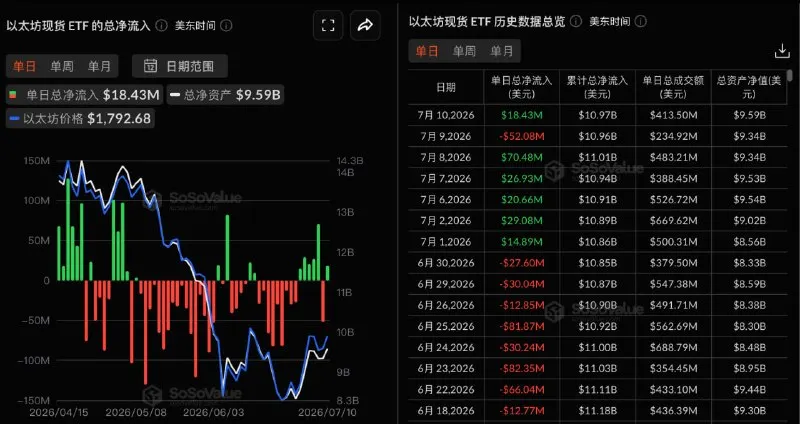
Ethereum Spot ETFs saw total net inflows of $18,433,400 yesterday, with BlackRock's ETHA leading the way with net inflows of $16,202,500.
-
4
The U.S. government transferred 4,036 ETH, worth approximately $7.22 million, from a seized wallet.
-
5
ETH has surpassed 1,800 USDT, with a 24-hour gain of 1.39%
-
6
Within 10 days of launch, the total number of transactions on Robinhood Chain exceeded 38.72 million.
-
7
A whale shorted 6,914 ETH with 25x leverage; the position is worth $12.43 million and is showing a floating loss of $50,700.
-
8
Svmuu Noon News
-
9
A certain address made over $1 million trading CASHCAT, with returns of 1,183 times the initial investment
-
10
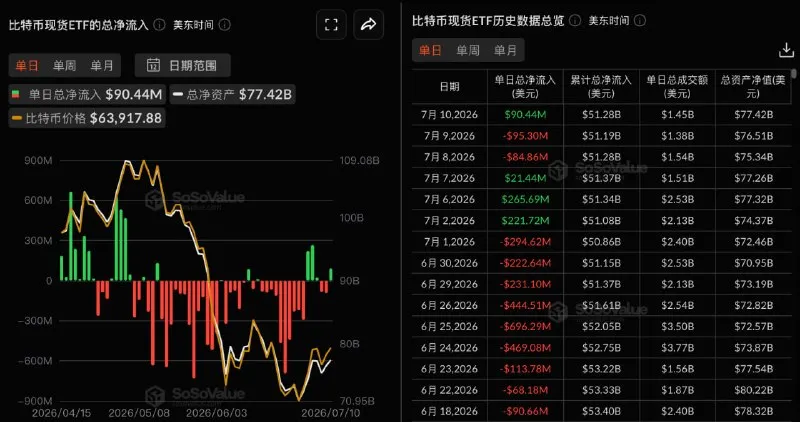
Bitcoin Spot ETFs saw total net inflows of $90.44 million yesterday, with BlackRock's IBIT leading the way with net inflows of $86.8272 million.

Recommended Reading

Hot Topics

Svmuu focuses on blockchain industry trends and cutting-edge cryptocurrency news, while also covering real-time market data and in-depth analysis of the Hong Kong, U.S., and foreign exchange markets. Here, you can not only access professional 24/7 news updates and accurate market data, but also utilize practical investment tools to help you capitalize on opportunities in both digital assets and traditional financial markets. Whether you are a blockchain enthusiast or an investor in Hong Kong, U.S., or foreign exchange markets, we provide efficient and timely information services to empower your investment decisions.
 Scan to Download App